An American Independence Story

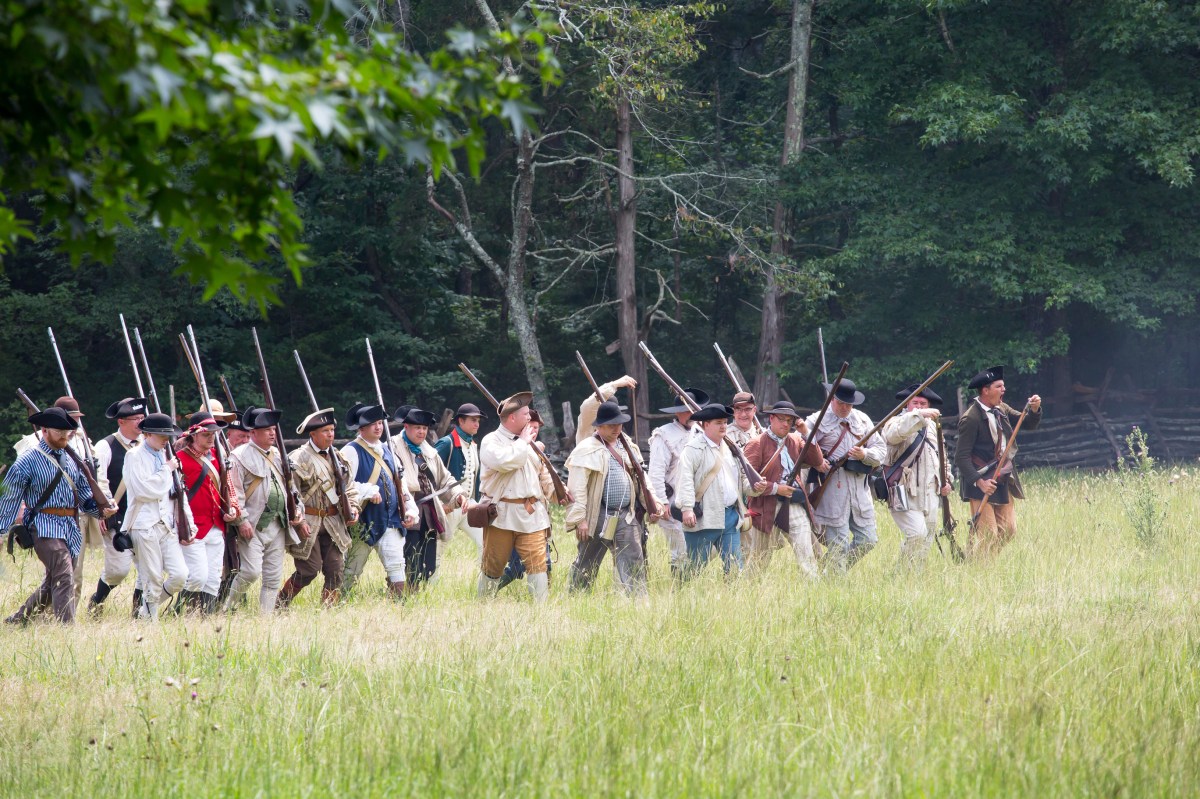
Thomas and Daniel, both of whom died in 1819, were veterans of the American Revolutionary War with contrasting allegiances. Thomas served as a British Loyalist, later becoming a preacher, while Daniel fought for independence and prospered in Georgia. Their legacies intertwined through their descendants, reflecting their significant historical impact.

Thomas and Daniel both died in 1819. There is no record of them ever meeting, but one day their lives and legacies would intersect in a fascinating way. Traveling by horse, they lived several hours apart during the American Revolutionary War. After the war and towards the end of their lives, they would live only about an hour apart, traveling by car. 

Thomas was a 21-year-old man who, from June through December of 1780, served with the Stevenson’s Creek Militia in the 96 Brigade under the command of Captain John Cotton and Lt. Colonel John Harris Cruger, all under the authority of King George III of Great Britain. 

According to my research, Thomas and his fellow British Loyalist soldiers would have helped fortify and stockade the town of Ninety-Six, South Carolina. It is speculated that the town was named for its 96-mile distance from the Cherokee Indian town of Keowee. However, no one knows for certain.

While Thomas returned home from his service in December of 1780, the next year would mark a pivotal turn in the Patriot efforts in the Southern Campaign of the War for Independence, with the Battles of Cowpens and Kings Mountain and the Siege of Ninety-Six.

Daniel was born in North Carolina, and he chose a different path than Thomas. 

As early as 1769, Daniel was a member of the North Carolina Regulators. The Regulator group Daniel was part of was no longer willing to accept the excessive British taxes and stated their grievances in writing to the British Crown. Daniel, along with several Culpepper cousins, signed the document at risk to their lives. 

Between 1776 and 1782, Daniel, along with his father William, served in the Anson County, North Carolina Militia, fighting for the Independence of the then 13 colonies.

Following the Revolutionary War, Daniel and his wife, Sarah, moved their family, along with Daniel’s father, William, and his family, to Wilkes County in the then-small state of Georgia. Daniel would go on to have a large family, substantial land holdings, and wealth. Upon his death at age 69 in 1819, Daniel was very generous to his wife of 43 years and all their adult children. Daniel’s children would disperse around the state of Georgia. 

Flooding at Daniel’s beloved Williams Creek Baptist Church in now Warren County, Ga., caused the church to be moved to higher ground, and the early pre-1800 cemetery was reclaimed by nature. Daniel’s exact grave location is known only to God.

After the War of Independence, Thomas became a preacher and pastor of three churches in Saluda County (then Edgefield County) and Lexington County, South Carolina, simultaneously. 

As did Daniel, Thomas would die in 1819; he was 59 years old. However, when Thomas wrote his will in 1810, he wanted it to be known that he was a preacher of the gospel, and even though he fought for the “wrong side” of the War of Independence, he dated his will “June 22, 1810, the 34th and 35th year of American Independence.” He was buried in an unmarked grave at Dry Creek Baptist Church in Saluda County, South Carolina. More than 100 years later, his descendants placed a beautiful and appropriate grave marker.

Rev. Thomas Deloach Jr. and Daniel Culpepper Sr. ultimately met in the DNA of all the descendants of James Monroe Culpepper and his wife, Mary Francis Deloach Culpepper, who married in Harris County Ga. in the fall of 1860, after the death of his first wife, Nancy. 

I am humbled and happy to share a small part of the stories of my great-grandfathers, Thomas and Daniel, both veterans of the American War of Independence.

Happy 250th Birthday America!
A Clipping From Time

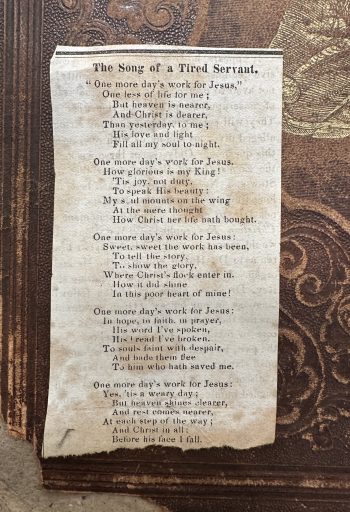
On March 6, 2020, after laying his father to rest, the author received a family Bible from his dad’s cousin Beverly. This Bible, a cherished family heirloom, contained a receipt and a clipping of the song “The Song of a Tired Servant” by Anna Bartlett Warner. The discovery linked her family’s history with profound blessings of faith.

The Hands and Heart of an Ancestor

Some days stand out from the others. On March 6, 2020, we laid my dad’s body to rest. After his funeral service, dad’s first cousin Beverly presented me with a family treasure. She said, since you are our family historian, you should have it. I was shocked at her generosity and thoughtfulness.

Beverly handed me a beautiful custom-made box containing the family Bible which belonged to Beverly and Dad’s great-grandfather and my great-great-grandfather, James Monroe Culpepper of Harris County, Ga. This Bible, printed in 1859, was one hundred eighty years old on that day. Today, we can add five years to that. Dad had revered this family Bible and spoke of it often. This Bible contains much of our family history.

This week, while preparing for a Culpepper family gathering in June to honor our grandparent’s 100th wedding anniversary, I searched this cherished Bible and found two items I had never noticed. One was a receipt from when my great-great-grandmother Frances Culpepper had made a purchase, and it had her name written on it and from whom the items were purchased. Some items purchased on the receipt were tea, coffee, buttons, etc. The second item found was a clipping from a newspaper of a song entitled “The Song of a Tired Servant.” The clipping is so tiny and can easily be overlooked.

This song touched my ancestor’s heart so much that their hands were moved to clip it and place it in the family’s treasured Bible. I began researching the song and found the author to be famous. Not so much for this song, but it is one most of us know and have memorized. The most famous song lyrics Anna Bartlett Warner wrote (1827-1915) is “Jesus Loves Me.” How often have I sung this powerful song knowing little to nothing about its writer? Anna’s sister, Susan Bogert Warner (1819-1885), is just as famous for her literary works.

Back to the clipping. This song focuses on the blessings and buffetings of following Christ as a disciple. Here are the words…

The Song of the Tired Servant

“One more day’s work for Jesus, one less of life for me; But heaven is nearer, and Christ is dearer than yesterday to me; 

His love and light fill all my soul tonight.

One more day’s work for Jesus. How glorious is my King! Tis joy, not duty, to speak His beauty. 

My soul mounts on the wing, at the mere thought how Christ her life hath bought.

One more day’s work for Jesus; Sweet, sweet the work has been, to tell the story to show the glory, Where Christ’s flock enter in.

 How it did shine in this poor heart of mine.

One more day’s work for Jesus in hope, in faith in prayer 

His Word I have spoken His bread I have broken. 

To souls faint with despair and bade them flee, to Him who hath saved me

One more day’s work for Jesus, yes, tis a weary day, but heaven shines clearer, and rest comes nearer.

 At each step of the way and Christ in all, before His face, I fall.”

I will not elaborate on the words of this song as they powerfully speak for themselves. I agree with the author, and her words are true. But what of the fortunate timing of my discovery? As the author’s words are true to me, the same words were true almost two centuries ago when my ancestor held this tiny clipping and placed it away where all truth abounds, the Word of God. 

It’s as if my great-great-grandmother or grandfather, without knowing, handed me a note of inspiration—a note from their hand to mine containing words that blessed and encouraged them, words they wanted to see again, so they tucked it away for future reference. I doubt they realized how far into the future that would be.

After years of following Christ, however imperfectly, I’ve learned not to believe in coincidences but in the flawless timing of my perfect Savior…