An American Independence Story

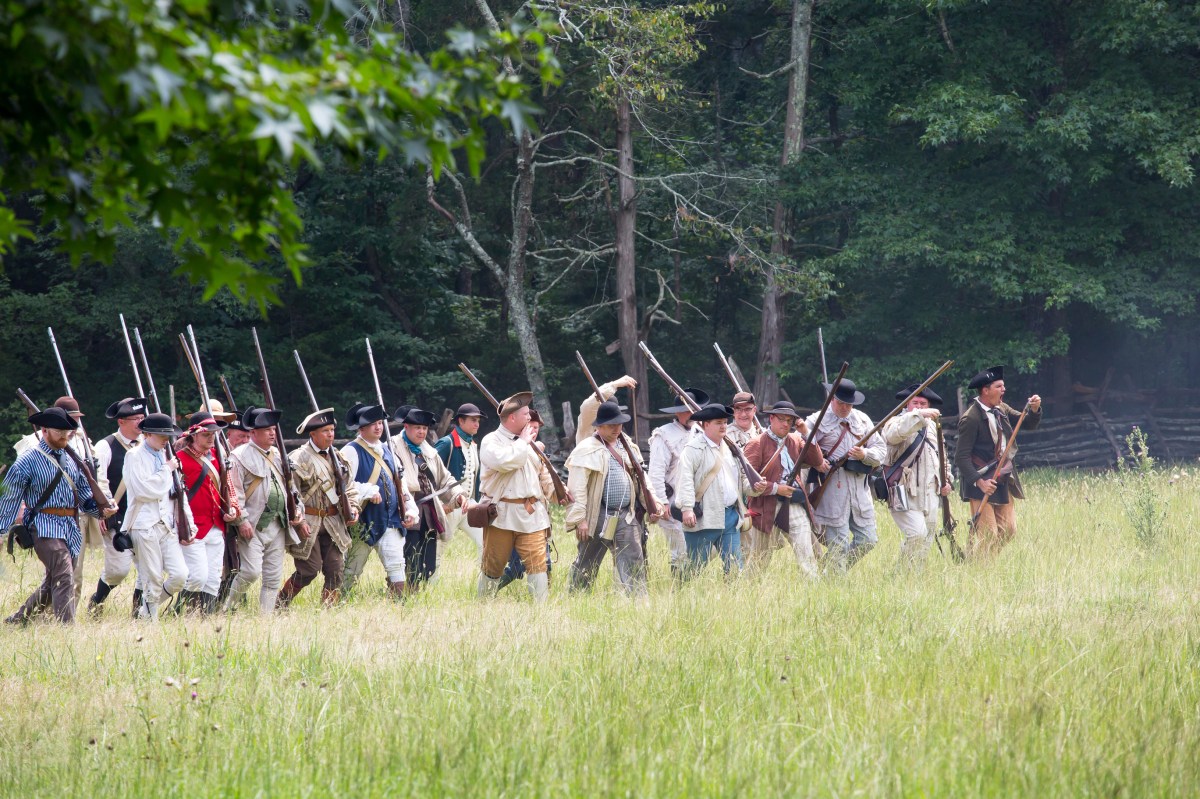
Thomas and Daniel, both of whom died in 1819, were veterans of the American Revolutionary War with contrasting allegiances. Thomas served as a British Loyalist, later becoming a preacher, while Daniel fought for independence and prospered in Georgia. Their legacies intertwined through their descendants, reflecting their significant historical impact.

Thomas and Daniel both died in 1819. There is no record of them ever meeting, but one day their lives and legacies would intersect in a fascinating way. Traveling by horse, they lived several hours apart during the American Revolutionary War. After the war and towards the end of their lives, they would live only about an hour apart, traveling by car. 

Thomas was a 21-year-old man who, from June through December of 1780, served with the Stevenson’s Creek Militia in the 96 Brigade under the command of Captain John Cotton and Lt. Colonel John Harris Cruger, all under the authority of King George III of Great Britain. 

According to my research, Thomas and his fellow British Loyalist soldiers would have helped fortify and stockade the town of Ninety-Six, South Carolina. It is speculated that the town was named for its 96-mile distance from the Cherokee Indian town of Keowee. However, no one knows for certain.

While Thomas returned home from his service in December of 1780, the next year would mark a pivotal turn in the Patriot efforts in the Southern Campaign of the War for Independence, with the Battles of Cowpens and Kings Mountain and the Siege of Ninety-Six.

Daniel was born in North Carolina, and he chose a different path than Thomas. 

As early as 1769, Daniel was a member of the North Carolina Regulators. The Regulator group Daniel was part of was no longer willing to accept the excessive British taxes and stated their grievances in writing to the British Crown. Daniel, along with several Culpepper cousins, signed the document at risk to their lives. 

Between 1776 and 1782, Daniel, along with his father William, served in the Anson County, North Carolina Militia, fighting for the Independence of the then 13 colonies.

Following the Revolutionary War, Daniel and his wife, Sarah, moved their family, along with Daniel’s father, William, and his family, to Wilkes County in the then-small state of Georgia. Daniel would go on to have a large family, substantial land holdings, and wealth. Upon his death at age 69 in 1819, Daniel was very generous to his wife of 43 years and all their adult children. Daniel’s children would disperse around the state of Georgia. 

Flooding at Daniel’s beloved Williams Creek Baptist Church in now Warren County, Ga., caused the church to be moved to higher ground, and the early pre-1800 cemetery was reclaimed by nature. Daniel’s exact grave location is known only to God.

After the War of Independence, Thomas became a preacher and pastor of three churches in Saluda County (then Edgefield County) and Lexington County, South Carolina, simultaneously. 

As did Daniel, Thomas would die in 1819; he was 59 years old. However, when Thomas wrote his will in 1810, he wanted it to be known that he was a preacher of the gospel, and even though he fought for the “wrong side” of the War of Independence, he dated his will “June 22, 1810, the 34th and 35th year of American Independence.” He was buried in an unmarked grave at Dry Creek Baptist Church in Saluda County, South Carolina. More than 100 years later, his descendants placed a beautiful and appropriate grave marker.

Rev. Thomas Deloach Jr. and Daniel Culpepper Sr. ultimately met in the DNA of all the descendants of James Monroe Culpepper and his wife, Mary Francis Deloach Culpepper, who married in Harris County Ga. in the fall of 1860, after the death of his first wife, Nancy. 

I am humbled and happy to share a small part of the stories of my great-grandfathers, Thomas and Daniel, both veterans of the American War of Independence.

Happy 250th Birthday America!
1787: A Georgia Pioneer Christmas

In the early 1780s, William Culpepper, a Revolutionary War patriot, moved with his family from North Carolina to Georgia, establishing their new life. By 1787, they became charter members of Williams Creek Baptist Church, celebrating Christmas amidst pioneer simplicity. Today, descendants cherish their legacy and the church’s ongoing tradition.

When most settlers migrated from North and South Carolina to Georgia, they took along whatever they needed to start their new lives. In a caravan of wagons, they would bring their cows for milk, hogs, chickens, and geese for mattresses and pillows. Some animals were caged, when possible, but the larger animals were herded along the dirt road or path. By the mid 1780’s, William’s family would have built a log home with wood shingles and begun their new life in Georgia.

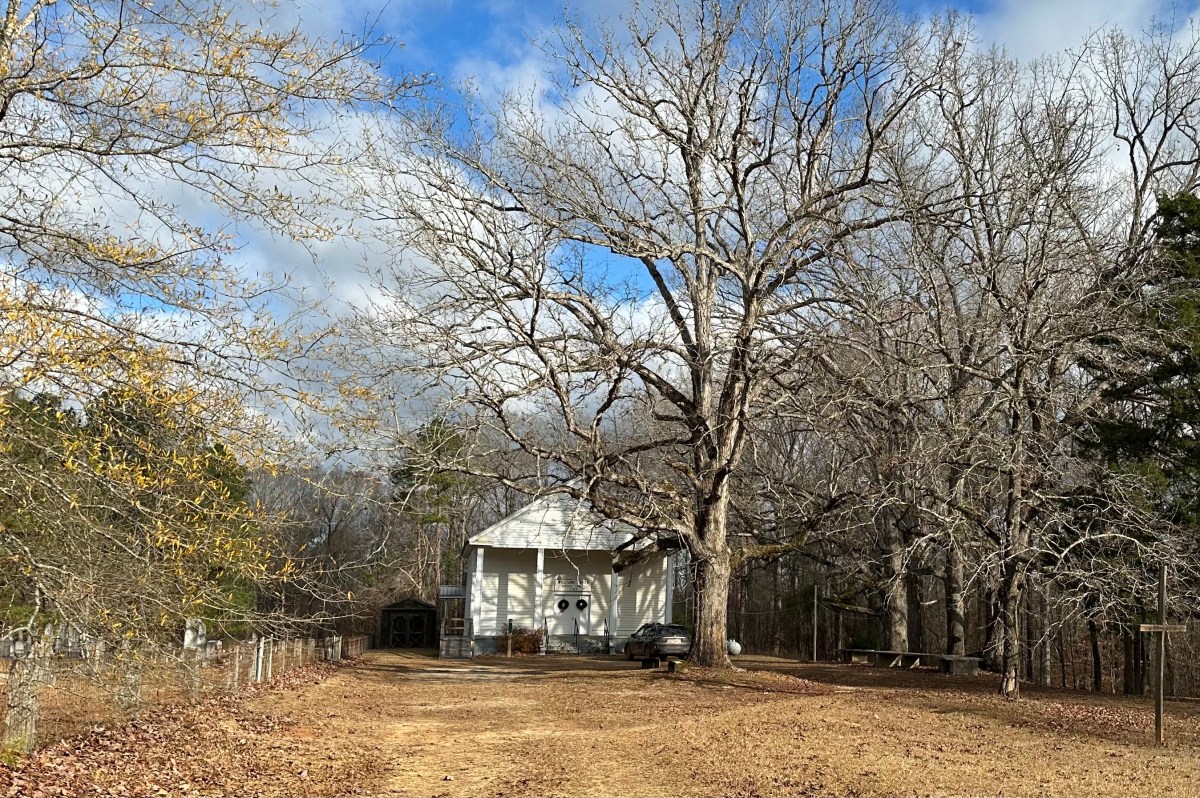
A few years after they arrived in Georgia and three days before Christmas, on December 22, 1787, William and his wife became charter members of the Church at Williams Creek in Warren County, Georgia (today known as Williams Creek Baptist Church). This would have been the church’s first Christmas service.

What songs would have been sung that day? Many of the Christmas Carols we sing today (O Little Town of Bethlehem, O Holy Night) were not yet written until the early to middle 1800’s. But there were some carols we love to sing today that became popular in the Middle to late 1700’s. Charles Wesley had written “Hark the Herald Angels Sing” in 1739. Wesley wrote the song in celebration of his new commitment as a Christ follower. The original first line was “Hark the Herald the Welkin (heaven) Sing”. In 1753, George Whitfield, the great preacher and friend of Wesley, changed the first line to what we sing today, “Hark the Herald Angels Sing.” Issac Watts wrote “Joy to the World” in 1719 and was popular towards the end of the 1700’s. The hymn “Amazing Grace” was about 10 years old at the time. Oh, to be a part of the church service that day.

Christmas Day was a few days later, and by this time, William’s children were young adults, and some were married. The matriarch of the family would have led in preparing a simple Christmas meal, cooking it over the open flame and embers in their home’s large fireplace. William or one of his sons would have hunted and killed a wild bird, and if none were found, one or two chickens would have been the main course. To complete the meal, she would have cooked dry beans or possibly green beans, maybe an apple pie (cooked in a Dutch oven, by the fireplace), and bread. Christmas gifts were not a consideration as the family would have been content with the company of their family, an excellent meal, and maybe a part of the day off from their labors. Such was Christmas in pioneer East Georgia in 1787.

Several months ago, Kim and I joined that same Williams Creek Baptist Church. The church still meets on the same property where my grandparents worshiped; the only difference is that we meet in the “new” sanctuary built in 1840. Some of my Culpepper ancestors are buried in marked graves in the cemetery next to the “new building.” I’m convinced that William and his son Daniel Culpepper, along with their families, are buried in the “old cemetery” down the hill in the woods beside Williams Creek. Their graves were probably once marked by field stones or simple wooden crosses, but have now been reclaimed by the nature that the little Boy in the manger created. 

This past Sunday, I was honored to play the piano and lead the music for our Christmas Service, marking the 238 years of Christmas services at Williams Creek. Our small congregation shared an excellent Christmas meal after the service because Baptists like to eat.

I look forward to meeting ancestors one day and having a good chat. So, from a grateful great-grandson of two Revolutionary War patriots and Georgia pioneers… Merry Christmas!

Have You Seen Mary

Sarah, curious about her mother Mary’s mysterious family, finds a trunk after her mother’s passing. Inside, she discovers her mother’s hidden past, including a scandal that led to her disownment. Corresponding with her great-uncle Charles, Sarah learns about her family’s history and the truth behind her mother’s silence.

Sarah is now opening a trunk in her mother’s closet, which she had seen before, and often asked, “What’s in the truck, mother?” “Oh, nothing important,” her mother would reply or say something similar. Today is different. Mom has passed away and is not here for her to ask once again, “What’s in the truck?” She thought, “If it wasn’t important, why did her mother keep it all these years? “ 

Sarah’s mother, Mary, was an open book about her life except for one thing: her family. Only in passing did she share stories from her childhood, but only mentioning her mother, brothers, and sister. Sarah knew little about her mother’s “people.” In the South, we often refer to our family and close friends as “our people.”

As she grew older, Sarah became curious about her mother’s “people” but learned not to bring up the subject. She left the “mystery trunk” to last as she went through her mother’s things. Now that her mom was not here to say no, Sarah cautiously opened the truck, not knowing what she would find.

The hinges on the old trunk creaked as Sarah lifted its lid. She found some legal documents, her parent’s marriage license, and other things. Then she noticed a small box containing pictures that looked like her mother as a child, but she wasn’t sure. A few photos of a family that she didn’t recognize. However, written on the back of one photo was “my younger brothers Rev. Charlie, Ab, and Mercer.” Sarah thought, “Who’s younger brothers?”

She dug further into her mother’s past and saw an envelope named Uncle Charles and a return address. Sarah laid the envelope aside and kept digging. One day, she got the courage to write to Reverend Uncle Charlie. To her surprise, Uncle Charlie responded with a letter: “Hello, Mary. I’m so glad you wrote. I am your great-uncle Charles, a Baptist pastor and a younger brother of your grandfather Sam.” (Sam and Charlie were two of seventeen siblings.)

In the months ahead, Sarah and great-uncle Charles corresponded. She learned family stories and names she had never heard. The one big question for Sarah was, “Why did mother never mention ‘her people’?” She would soon have her answer.

Sarah’s mother, Mary, was the oldest daughter of Sam and Mary Ella. Sam married his sweetheart on December 31, 1882. Soon came two sons and a beautiful baby girl, Mary, named after her mother. Mary’s young life was typical for a family in the reconstruction of the South, that is, until age 16. Mary found herself with child and not married. 

The reputation of many Southern families would rise or crumble according to strict adherence to society’s expectations.  Mary mustered the nerve to tell her mom and dad about her “situation.” Back then, when a family had a “situation,” the young lady would go “visit family” just far enough away for the news to not reach home, and after nine months or so, she would return. While her mother’s face displayed disappointment, her dad was so furious that he threw her out of their home, hoping to save the family’s reputation.

As the anger of Mary’s father (the Reverend Sam) lessened, he expected her to return home, but she never did. Month after month, Sam and Mary Ella waited. Sam became desperate to find his oldest daughter, so he changed jobs and was hired by a railroad company as a food “butcher boy.” (In the 1880s, the U.S. colloquialism Butcher and Butcher Boy referred to a vendor of candy, fruit, sandwiches, newspapers, etc., on street corners and trains, at sporting events, etc.)

This new job on the trains allowed him to repeat the question in every train car and depot: “Have you seen Mary?” For years, he traveled and asked that question. Sadly, Sam and Mary Ella’s marriage could not withstand the stress of how Sam handled the “situation” with their daughter, and they divorced in 1915.

As their letters continued, great Uncle Charles would tell Sarah more about her grandfather’s “people.”  Charles contacted his brother Sam and told him about his granddaughter, but no one knew if Sarah and Sam ever met. Sarah’s grandmother, Mary Ella, died in 1935 and was buried with her “people.” Sarah’s grandfather, Rev. Samuel Bartley Culpepper (my great-grandfather Mercer’s older brother), died in 1941 at 83, probably still asking, “Has anyone seen Mary?”